
Hair-loss treatment in Surat
PRP Hair Treatment in Surat
PRP hair treatment in Surat uses platelet-rich plasma prepared from a small sample of your own blood, injected into thinning areas of the scalp after numbing. It is a supportive treatment for early pattern hair loss and after a transplant, given as a course of sessions and judged with photographs. It does not replace diagnosis or proven medical treatment.
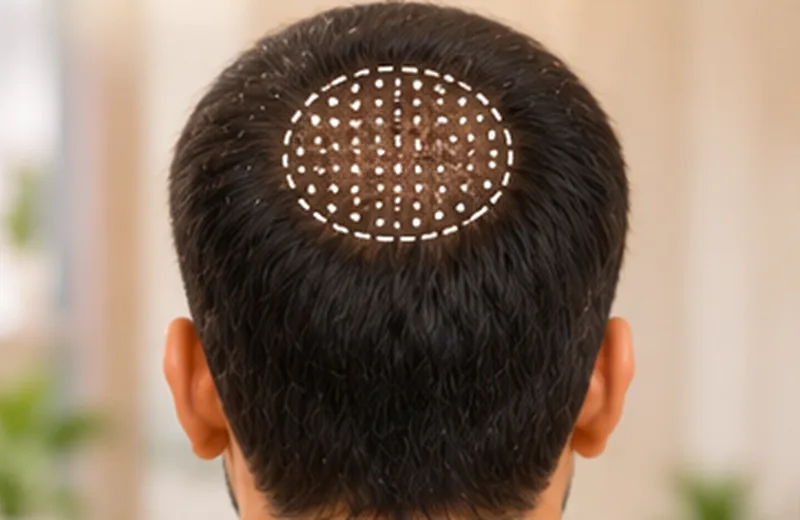
PRP, or platelet-rich plasma, is an adjunct, not a cure. It may help slow thinning and improve hair calibre where follicles are miniaturised but still present. Evidence varies by study and by patient, and it cannot regrow hair where follicles are gone. GFC, growth-factor concentrate, is a related preparation chosen case by case.
What is PRP hair treatment?
PRP hair treatment is a procedure in which a small amount of your blood is drawn and spun in a centrifuge to concentrate the platelets, which carry growth factors. The platelet-rich layer is injected into the thinning areas of the scalp after a numbing cream or local anaesthetic. Growth-factor concentrate, or GFC, is a related preparation that isolates the growth factors released by the platelets so that the injected volume is smaller.
At Elegance Clinic in Surat, PRP is offered within a medical hair-loss plan led by Dr. Ashutosh Shah, M.B.B.S., M.S. (General Surgery), M.Ch. (Plastic Surgery), D.N.B. (Plastic Surgery), a plastic, reconstructive and cosmetic surgeon practising in Surat since 2004, with sessions at the Vesu and Adajan centres. It is never offered before a diagnosis, because PRP given for the wrong cause of hair fall wastes money and time. The International Society of Hair Restoration Surgery lists it among supportive medical treatments.
Who is a candidate for PRP hair treatment?
- Early male or female pattern hair loss where follicles are miniaturised but still present.
- Patients already on medical treatment who want added support.
- Patients recovering from a hair transplant, to support healing and the native hair around the grafts.
- Patients who cannot take, or do not want, oral medicines, as a partial alternative after counselling.
Who may not be suitable
PRP does not work on bald areas with no follicles, and it is not used in active scalp infection, in people with low platelet counts, bleeding disorders or certain cancers, in those on blood thinners without medical review, or during pregnancy. The doctor checks this at consultation, and if PRP is unlikely to help you, you will be told.
PRP, GFC or other supportive treatments?
| Option | What it is | Where it fits |
|---|---|---|
| PRP | Platelet-rich plasma from your own blood, injected into the scalp | Early thinning; after a transplant |
| GFC | Growth factors isolated from your platelets, smaller volume | Chosen case by case; similar role to PRP |
| Microneedling | Fine needles over the scalp, sometimes combined with PRP or minoxidil | Supportive; limited evidence |
| Low-level light therapy | Home devices or clinic sessions | Supportive; limited evidence |
| Mesotherapy | Micro-injections of vitamin and peptide solutions | Limited evidence; not a first-line option |
None of these replaces proven medical treatment or surgery where hair is already lost. You are told which options have good evidence and which do not.
How is PRP hair treatment performed?
- Consultation and diagnosis: the cause of hair loss is confirmed first; PRP is planned only where it may help.
- Preparation: eat normally, avoid alcohol the day before, and tell the clinic about blood thinners or recent illness.
- Blood draw: a small sample is taken from the arm, as for a routine test.
- Processing: the sample is spun in a centrifuge to separate the platelet-rich layer, or processed further for GFC.
- Numbing: a numbing cream or local anaesthetic is applied to the scalp.
- Injections: small volumes are injected across the thinning area in a grid pattern.
- Aftercare: no washing for a few hours, no hair products that day, and photographs at the start of the course and at review.
Each visit takes about 45 to 60 minutes. A usual course is three to four sessions about a month apart, then a maintenance session every four to six months if it is helping.
What are the benefits of PRP?
- Uses your own blood, so allergy is not a concern.
- Minimal downtime; most people return to work the same day.
- Can be combined with medicines and with a transplant.
- May help slow thinning and improve the thickness of fine hairs in early pattern hair loss.
These are possible benefits, not promises. Whether PRP helps you is judged with photographs after the first course, and if there is no visible benefit, the plan is changed rather than repeated.
Is PRP safe? Side effects and risks
PRP is a low-risk procedure because the material is your own blood. Mild pain, pin-point bleeding, swelling and tenderness of the scalp for a day or two are usual. Bruising, headache and temporary shedding can occur. Infection is rare when the sample is handled in a sterile way. Severe allergic reactions are very unlikely. The main risk is disappointment if PRP is used for the wrong cause of hair loss or as a replacement for proven treatment, which is why it sits inside a diagnosed plan. Contact the clinic if you have increasing pain, pus or fever after a session.
How much downtime does PRP need?
Almost none. The scalp may be tender and slightly swollen for a day or two. Avoid washing for the rest of the day, avoid hair products and heavy sweating for 24 hours, and avoid anti-inflammatory painkillers around the session unless prescribed, because they can reduce the effect of platelets. Normal routine resumes the next day.
What does PRP hair treatment cost in Surat?
The cost of PRP hair treatment in Surat depends on your plan, so there is no fixed package. The main factors are the number of sessions, whether PRP or GFC is used, whether it is combined with medicines or a transplant, and follow-up visits. After assessment you receive a written plan with the expected costs. No prices are quoted on this website, and there are no offers or EMI promotions.
What results can I expect from PRP?
Any change is gradual. Shedding usually reduces first, over two to three months, and any thickening of fine hairs is judged at three to six months with photographs. PRP does not create new follicles, so it cannot fill a bald area. Results differ between people and depend on the stage of hair loss and the medical treatment used alongside. No percentage or guarantee is given, and maintenance sessions are suggested only if the first course has shown a visible benefit.
Why choose Elegance Clinic for PRP in Surat?
- Diagnosis first: PRP is given only after the cause of hair loss is known, by a plan led by Dr. Ashutosh Shah, M.B.B.S., M.S. (General Surgery), M.Ch. (Plastic Surgery), D.N.B. (Plastic Surgery), practising in Surat since 2004.
- Honest about evidence: PRP is described as supportive, and you are told when it is unlikely to help.
- Judged with photographs: the course is reviewed with standard photographs, and it is not repeated without a visible benefit.
- Sterile preparation: your blood is processed and injected in a clinical set-up.
- Two centres in Surat: sessions at Vesu and at Adajan, in English, Hindi and Gujarati.
The clinic does not publish patient photographs, reviews or case counts, in line with Indian medical advertising rules.
Book a PRP consultation in Surat
If you are considering PRP for thinning hair, start with a hair-loss consultation at the Vesu or Adajan centre so the cause is confirmed first. The visit takes 30 to 45 minutes and ends with a written plan, which may or may not include PRP. Message the clinic on WhatsApp or see the location and booking page.
Explore
Supportive options
PRP course
Three to four sessions, about a month apart, then review with photographs.
View details →02GFC (growth-factor concentrate)
A platelet-derived preparation with a similar role; chosen case by case.
View details →03PRP after transplant
Used alongside surgery to support healing and the existing native hair.
View details →Common questions
PRP Hair Treatment in Surat, answered.
Short, honest answers. Your own case is discussed at consultation. All questions.
Does PRP work for hair loss?
It has a supportive role in early thinning where follicles are still present. Evidence varies by study and by patient. It does not replace diagnosis or medical treatment, and it cannot regrow hair where follicles are gone. Whether it helps you is judged with photographs after the first course.
How much does PRP hair treatment cost in Surat?
The cost depends on the number of sessions, whether PRP or GFC is used, whether it is combined with medicines or a transplant, and follow-up visits. There is no fixed package; a written plan with expected costs is given after assessment, and no prices are quoted online.
Is PRP painful?
A numbing cream or local anaesthetic is used, so most people describe pin-prick discomfort during the injections. The scalp can feel tender for a day or two afterwards, and simple pain relief is usually enough. Tell the team if you are anxious about needles.
How many PRP sessions are needed?
A course is usually three to four sessions about a month apart, then maintenance every four to six months if the first course has helped. The plan is reviewed with photographs, and it is not repeated without a visible benefit.
Is PRP compulsory with a hair transplant?
No. It is an optional addition that may support healing and the native hair around the grafts. The possible benefit is explained and the choice is yours, and declining it does not change how the transplant itself is planned or carried out by the team.
How soon will I see a change after PRP?
Any change is gradual. Shedding usually reduces first over two to three months, and any thickening of fine hairs is judged at three to six months with photographs. No exact timeline or percentage is promised, because the response differs from one person to another and with the cause of thinning.
Consultation with Dr. Ashutosh Shah at the Vesu clinic, by appointment. No forms, no waiting on hold.