
Hair and scalp conditions
Male-Pattern Hair Loss in Surat
Male pattern hair loss in Surat is the most common cause of thinning in men: a genetic sensitivity of scalp follicles to the hormone DHT that shows as a receding hairline, temple recession and crown thinning. It can be slowed with medical treatment, and restored with a transplant once the pattern is stable. The back and sides are usually spared.
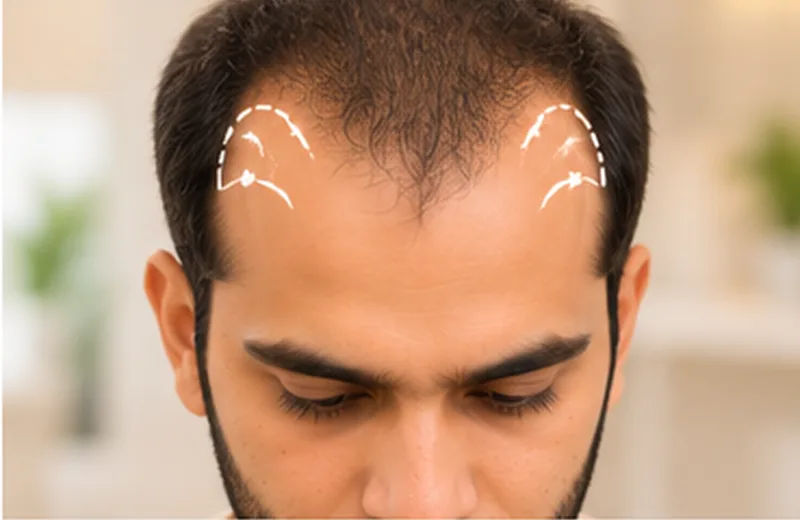
Male-pattern hair loss, or androgenetic alopecia, is progressive: follicles shrink under DHT until they stop producing visible hair. Treatment has two parts, protecting the hair you have with medicines and, when the loss is stable, restoring what is lost with a transplant. Starting early keeps more options open.
What is male-pattern hair loss?
Male-pattern hair loss is a hereditary condition in which hair follicles on the top and front of the scalp are sensitive to dihydrotestosterone (DHT), a hormone made from testosterone. Over years the sensitive follicles miniaturise: each growth cycle produces a finer, shorter hair until the follicle stops producing visible hair. Follicles at the back and sides usually lack this sensitivity, which is why that hair persists and can be used as a donor area. The NHS page on hair loss describes it as the most common type of hair loss in men.
At Elegance Clinic in Surat, men with pattern hair loss are assessed by Dr. Ashutosh Shah, M.B.B.S., M.S. (General Surgery), M.Ch. (Plastic Surgery), D.N.B. (Plastic Surgery), a plastic, reconstructive and cosmetic surgeon practising in Surat since 2004, with consultations at the Vesu and Adajan centres.
What are the signs and causes of male-pattern hair loss?
Signs
- A receding hairline, first at the temples, forming an M shape.
- Thinning at the crown that widens over time.
- Finer, shorter hairs on the top of the scalp compared with the sides.
- More scalp visible under bright light or when the hair is wet.
- Gradual change over years rather than sudden shedding.
Causes and what does not cause it
The cause is genetic sensitivity to DHT, inherited from either parent. It is not caused by shampooing, helmets, oiling or not oiling, shaving, masturbation or wearing caps. Stress, illness, crash dieting and deficiencies can add a temporary shedding on top of the pattern, and a scalp condition can coexist, which is why the first visit looks for more than one cause. See hair and scalp conditions for the other types of hair loss.
How is male-pattern hair loss graded?
The Norwood scale describes the pattern from stage I (no visible loss) through temple recession and crown thinning to stage VII, where only a band of hair remains at the back and sides. The grade, your age and your family history help estimate how much more hair may be lost, which decides how conservative a hairline should be and how many grafts a lifetime donor area can safely give. A receding hairline at twenty-two needs a different plan from crown thinning at forty-five.
Who needs treatment for male-pattern hair loss?
Any man who has noticed a receding hairline, crown thinning or a finer texture on top and wants to keep the hair he has. Earlier treatment protects more hair; medicines work far better on thinning hair than on a bare scalp. Men who have had a transplant also need ongoing treatment to protect the native hair around the grafts.
When a consultation is needed
Hair loss that is sudden, patchy, itchy, scaly or painful is usually not pattern loss and needs examination. So does loss with other symptoms, or loss that bothers you enough to consider treatment, so that the plan starts from a diagnosis rather than a product.
Which androgenetic alopecia treatment options are available in Surat?
| Stage of plan | Option | What it does |
|---|---|---|
| Protect | Minoxidil (topical, or supervised oral in selected men) | Prolongs the growth phase and thickens miniaturised hairs; works better on the crown and recent thinning than on a bare hairline |
| Protect | Finasteride or dutasteride, after counselling | Reduces DHT at the follicle and slows the loss; side effects are explained before starting |
| Support | PRP, low-level light therapy | Added support alongside medicines; evidence varies |
| Restore | FUE or FUT hair transplant | Moves donor hair to the hairline, temples or crown once the loss is stable |
| Camouflage | Scalp micropigmentation, hair systems | For advanced grades or while treatment takes effect |
Most men start with the protect stage. Details of the medicines, their use and side effects are on the hair-loss treatment page.
When is a hair transplant considered for male-pattern hair loss?
Usually after a year or more of medical treatment has shown the loss is stable, from the mid-twenties onward, with a conservative, age-appropriate hairline and a donor plan that leaves hair for future sessions. The hair transplant in Surat page explains who is suitable, the procedure, recovery, risks and cost factors. Advanced grades may be staged over two sessions, use beard hair as extra donor, or combine surgery with scalp micropigmentation. Medical treatment continues after surgery to protect the native hair.
What are the benefits of treating male-pattern hair loss early?
- Thinning hair that is still present can be thickened and kept; bare scalp cannot be regrown by medicines.
- The pattern is stabilised before any surgery, so grafts are placed where they will still look right in ten years.
- A smaller transplant, or none, may be needed later.
- Temporary shedding from other causes is found and treated at the same time.
These are general benefits. How much hair is kept or regained depends on the stage, genetics and consistency of treatment, which is discussed at consultation rather than promised.
Are the treatments safe? Side effects
Minoxidil can cause scalp irritation, initial shedding in the first weeks and unwanted facial hair if it runs onto the face; oral minoxidil can cause low blood pressure, fluid retention and body hair growth and is used only under supervision. Finasteride and dutasteride can cause reduced libido, erectile difficulty, reduced ejaculate volume, breast tenderness or mood change in a minority of men, usually settling on stopping; these are discussed openly before starting and at every review. Surgery carries the usual transplant risks, explained before consent. Contact the clinic if you notice chest symptoms, swelling, mood change or severe scalp irritation.
What does treating male-pattern hair loss cost in Surat?
The cost depends on the stage of your plan, so there is no fixed package. Medical treatment is priced by the consultation, any tests, the medicines and the reviews, and continues long term. A transplant is priced by graft number, technique and sessions, as explained in the guide to hair transplant cost in Surat. After assessment you receive a written plan with expected costs. No prices are quoted on this website, and there are no offers or EMI promotions.
What results can I expect?
With medicines, shedding usually settles within a few months and thinning hairs may thicken over six to twelve months, judged with photographs; the main result is hair that is kept rather than lost, for as long as treatment continues. After a transplant, hairs shed first and regrow from about three months, with the result judged at nine to twelve months. Results differ between people, and no percentage or guarantee is given. Stopping treatment lets the pattern resume gradually.
Why choose Elegance Clinic for male-pattern hair loss in Surat?
- Doctor-led diagnosis: the pattern and any added causes are assessed by Dr. Ashutosh Shah, M.B.B.S., M.S. (General Surgery), M.Ch. (Plastic Surgery), D.N.B. (Plastic Surgery), practising in Surat since 2004.
- Protect before restore: medical treatment is offered first, and a transplant only when the loss is stable and the donor area allows it.
- Age-appropriate planning: hairlines and graft numbers are planned for the man you will be at fifty, not only today.
- Two centres in Surat: consultations at Vesu and at Adajan, in English, Hindi and Gujarati.
The clinic does not publish patient photographs, reviews or case counts, in line with Indian medical advertising rules.
Book a consultation for male-pattern hair loss in Surat
If your hairline is receding or your crown is thinning, start with a consultation at the Vesu or Adajan centre. Bring any earlier reports and a list of medicines. The visit takes 30 to 45 minutes and ends with a written plan. Message the clinic on WhatsApp or see the location and booking page.
Explore
Where to go next

Hair-loss treatment
Minoxidil, finasteride and supportive care to protect the hair you have.
View details →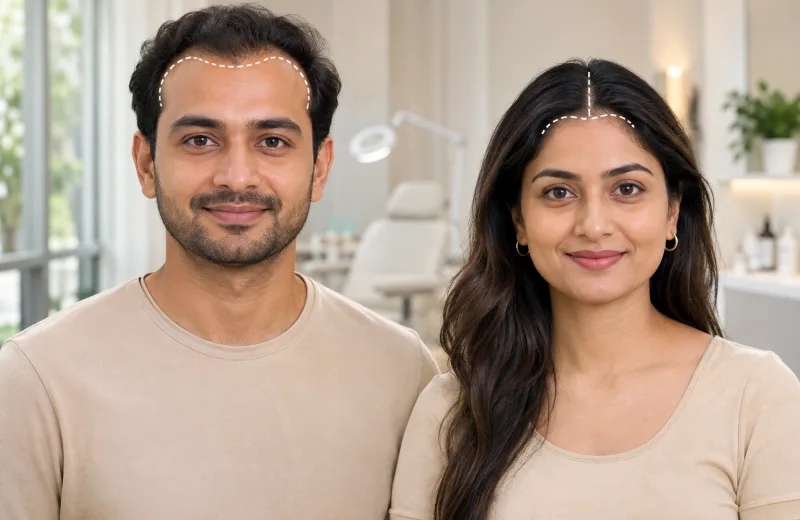
Hair transplant in Surat
FUE or FUT restoration once the pattern is stable and the donor area allows.
View details →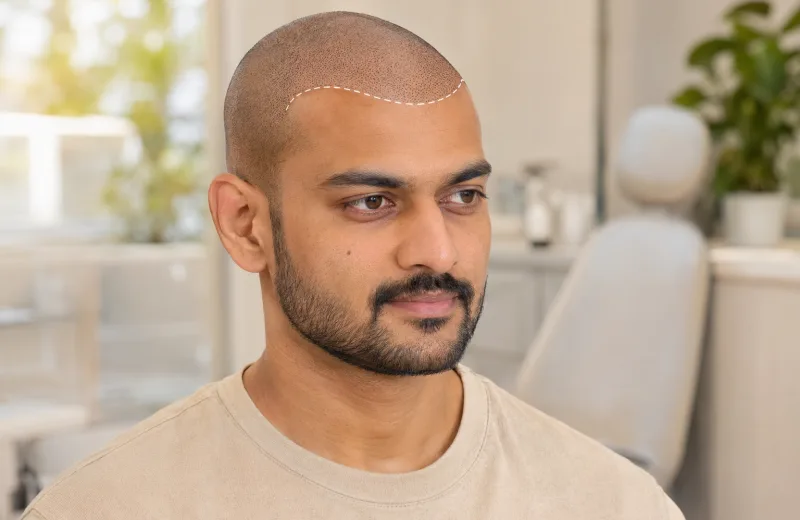
Scalp micropigmentation
Camouflage for advanced grades or a shaved-head look.
View details →Common questions
Male-Pattern Hair Loss in Surat, answered.
Short, honest answers. Your own case is discussed at consultation. All questions.
Can male-pattern hair loss be stopped?
It can be slowed and partly reversed with medical treatment that continues long term, and the hair you have can usually be protected. There is no one-time fix and no cure; stopping treatment lets the loss resume gradually over months.
Is a receding hairline treatable?
Yes. Medicines protect the hair behind the hairline and can thicken recent thinning, and a transplant can rebuild the hairline once the pattern is stable. A long-standing bare hairline responds to surgery rather than to medicines alone, so the right mix is decided after the surgeon examines your scalp.
I am 22 and receding. Should I get a hair transplant?
Usually not yet. The future pattern is unclear at that age, and grafts placed now may look out of place later. Medical treatment and a review after a year is the safer path, with surgery considered from the mid-twenties if the loss is stable.
Does minoxidil work on crown thinning?
Minoxidil works better on the crown and on recent thinning, where follicles are still present, than anywhere else. It is less effective on a long-standing bare hairline, but it still protects the hair behind it, which matters for a later transplant.
Will transplanted hair also fall out?
Transplanted donor hair from the back and sides usually persists because it is resistant to DHT. The untreated native hair around it can keep thinning, which is why medical treatment continues after surgery. Regular reviews help the team adjust that treatment as your hair changes.
Does hair loss come only from the mother's side?
No. Genes from both parents contribute to male-pattern hair loss, so a father or grandfather with a full head of hair does not rule it out. A family history on either side raises the chance, and an early scalp examination shows whether thinning has already started.
Consultation with Dr. Ashutosh Shah at the Vesu clinic, by appointment. No forms, no waiting on hold.