
Hair transplant in Surat
Beard Transplant in Surat
A beard transplant in Surat moves single and double-hair FUE grafts from the back of the scalp into the cheeks, chin, moustache or sideburns to fill patches, add density or cover scars. It is done under local anaesthesia in a day-care session, and the result depends on placing each hair in the direction and angle of your own beard.
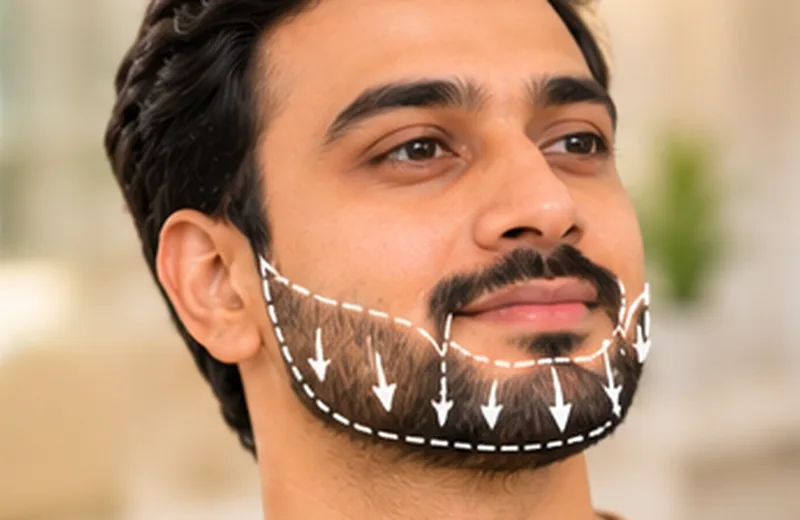
A beard transplant uses your own scalp hair, placed one graft at a time, to build a fuller beard or moustache where hair is patchy or has never grown. Scalp hair takes on much of the character of beard hair after a few months. Planning the design, direction and angle with you in a mirror is what makes it look natural.
What is a beard transplant?
A beard transplant is a hair transplant to the face. Follicular units of one or two hairs are taken from the permanent donor zone at the back of the scalp with the FUE method and placed through tiny sites made at a low angle in the beard area. In some men, denser beard hair under the chin can also serve as a donor. For the moustache and the edges of the beard, only single-hair grafts are used so the line stays soft.
At Elegance Clinic in Surat, beard and moustache transplants are planned and performed by Dr. Ashutosh Shah, M.B.B.S., M.S. (General Surgery), M.Ch. (Plastic Surgery), D.N.B. (Plastic Surgery), a plastic, reconstructive and cosmetic surgeon practising in Surat since 2004, with consultations at the Vesu and Adajan centres.
Facial hair that is patchy because of genetics does not respond to oils or supplements, because the follicles are absent rather than weak. Patchiness from active alopecia areata, infection or scarring is assessed first, since those conditions need treatment before any grafting.
Who is a candidate for beard transplant?
- Men with patchy beard growth or low density from genetics, on the cheeks, chin or jawline.
- Men who want defined sideburns, a goatee or a fuller moustache.
- Scars from injury, burns, acne, surgery or cleft repair where hair does not grow, once the scar is mature.
- Masculinising facial hair as part of gender-affirming care.
- Adults with a dense scalp donor area and realistic expectations about density.
Who may not be suitable
A beard transplant is usually not advised during active alopecia areata of the beard, with active skin infection or acne, in keloid-prone skin without assessment, in very young men whose beard is still developing, or when the scalp donor area is weak. Suitability is decided at a consultation with examination of the face and the donor area, never from photographs alone.
Which beard transplant options are available in Surat?
| Option | What it involves | Typical graft range |
|---|---|---|
| Patchy beard fill | Grafts added to cheek or chin patches to even out density | 300 to 800 |
| Goatee and moustache | Fine single grafts for the upper lip and chin, where angle matters most | 150 to 500 |
| Full beard build | Cheeks, jawline, chin and moustache in one or two sessions | 1,000 to 2,500 |
| Sideburns and scars | Reconstruction of sideburns and grafting into facial scars after assessment | 100 to 500 |
Graft ranges are typical figures, not quotes. Your own number is set at consultation from the area, the density you want and what your donor area can spare. Where only a few hairs are missing, no treatment or camouflage may be the honest advice.
How is a beard transplant performed?
- Consultation and design: the beard outline is drawn with you in front of a mirror, matched to your face shape and the way your existing beard grows.
- Preparation: stop smoking and alcohol as advised; shave or trim the beard area as instructed the day before.
- Local anaesthesia: numbing injections in the donor area and the face, the main discomfort of the day.
- Donor harvesting: single and double-hair units are extracted from the back of the scalp with a micro punch and spread evenly.
- Site creation: tiny sites are made at a very flat angle following the natural direction of beard growth, which changes across the cheek, jaw and chin.
- Placement: grafts are placed one by one, single hairs at the edges and the moustache.
- Immediate care: written instructions, medicines and the first follow-up date, usually the next day.
A session takes about three to six hours depending on the number of grafts.
What are the benefits of a beard transplant?
- Real, growing hair in areas where none grew, which can be shaved, trimmed and styled like the rest of the beard.
- Patches and scars can be filled so the beard reads as one continuous shape.
- Local anaesthesia and same-day discharge; no hospital stay.
- Direction and angle can be controlled hair by hair, which is why the design stage matters so much.
These are general advantages of the procedure. How much they apply to you depends on your donor hair, your skin and the area, and they are discussed at consultation rather than promised.
Is a beard transplant safe? Side effects and risks
A beard transplant is a well-established procedure with a low rate of serious complications when it is performed by a qualified surgical team in a sterile set-up, but like any surgery it carries risks. Expected effects in the first days are redness, small crusts at each graft site, mild swelling and some tightness. Transplanted hairs shed between weeks two and six before regrowing.
Less common problems are small bumps or ingrown hairs at graft sites, folliculitis, temporary numbness, uneven density, hairs growing at the wrong angle, visible donor dots if the scalp is cut very short, and, in keloid-prone skin, thickened scars. Infection is rare. All of these are explained and written in your consent form. Call the clinic the same day for fever, spreading redness, pus or increasing pain. The International Society of Hair Restoration Surgery publishes independent patient information on hair restoration surgery.
How long does beard transplant recovery take?
- Days 1 to 5: redness and crusts; no touching, rubbing or washing of the face beyond the method shown; sleep with the head raised.
- Days 5 to 10: gentle washing; crusts loosen and fall off on their own; most men return to desk work within a few days and to physical work within ten days.
- Weeks 2 to 6: transplanted hairs shed, which is expected; trimming from three to four weeks and shaving from about four weeks, once the grafts are secure.
- Follow-up: the next day, at about ten days, one month, three months and at the one-year review, with photographs.
Recovery varies from person to person. Your written plan gives dates for your own case.
What does beard transplant cost in Surat?
The cost of a beard or moustache transplant in Surat depends on your individual assessment, so there is no fixed package. The main factors are the number of grafts, the areas treated, whether one or two sessions are planned, anaesthesia and facility charges, medicines and follow-up visits. After examination you receive a written estimate with a range. The guide to hair transplant cost in Surat explains each factor. No prices are quoted on this website, and there are no offers or EMI promotions.
What results can I expect, and when?
Transplanted hairs shed in the first weeks and start regrowing from about the third month. The beard looks fuller between months six and eight and is judged at nine to twelve months, when it can be shaved and styled normally. Scalp hair placed in the beard usually becomes coarser over time, though it may stay slightly different from native beard hair.
Results differ between people and depend on donor hair quality, skin type, the size of the area and aftercare. Some men choose a second session for more density. No percentage or guarantee is given for growth.
Why choose Elegance Clinic for a beard transplant in Surat?
- Plastic surgeon-led care: facial work needs attention to angle, symmetry and scars, and it is planned and performed by Dr. Ashutosh Shah, M.B.B.S., M.S. (General Surgery), M.Ch. (Plastic Surgery), D.N.B. (Plastic Surgery), practising in Surat since 2004.
- Design agreed first: the outline is drawn with you in a mirror and written into the plan before any graft is placed.
- Honest graft numbers: set by the area and your donor supply, with a second session kept possible.
- Two centres in Surat: consultations at Vesu and at Adajan, in English, Hindi and Gujarati.
- Follow-up included: reviews with photographs through the first year.
The clinic does not publish patient photographs, reviews or case counts, in line with Indian medical advertising rules, so results are discussed with you at consultation.
Book a beard transplant consultation in Surat
If you are considering a beard or moustache transplant in Surat, start with a consultation at the Vesu or Adajan centre. Come with your beard grown out for a week or two so the pattern can be seen. The visit takes 30 to 45 minutes and ends with a written plan. Message the clinic on WhatsApp or see the location and booking page.
Explore
Options under Beard Transplant in Surat
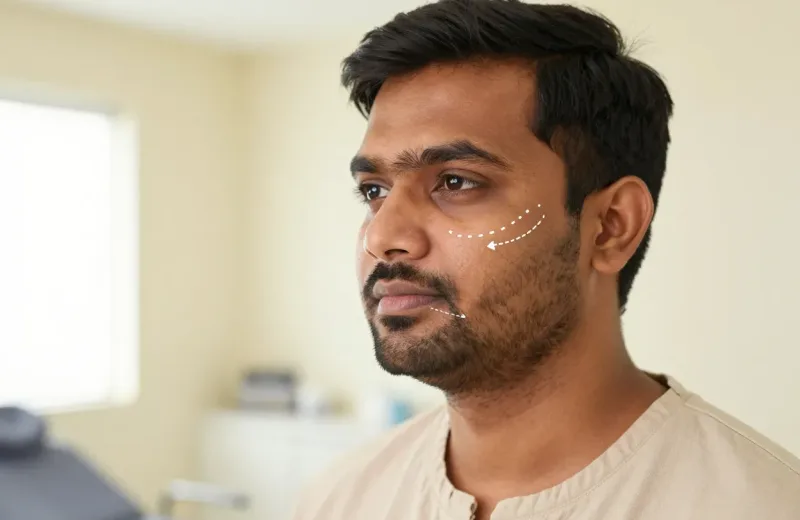
Patchy beard fill
Grafts added to cheeks or chin patches to even out density.
View details →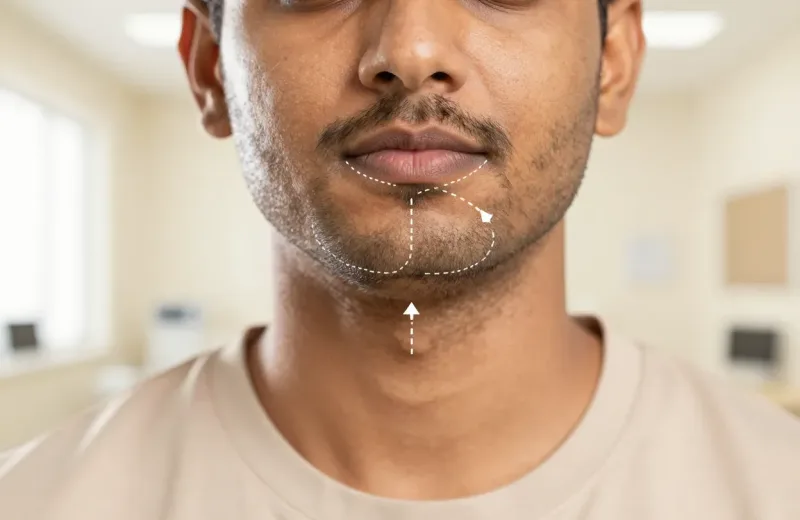
Goatee and moustache
Fine single grafts for the upper lip and chin, where angle matters most.
View details →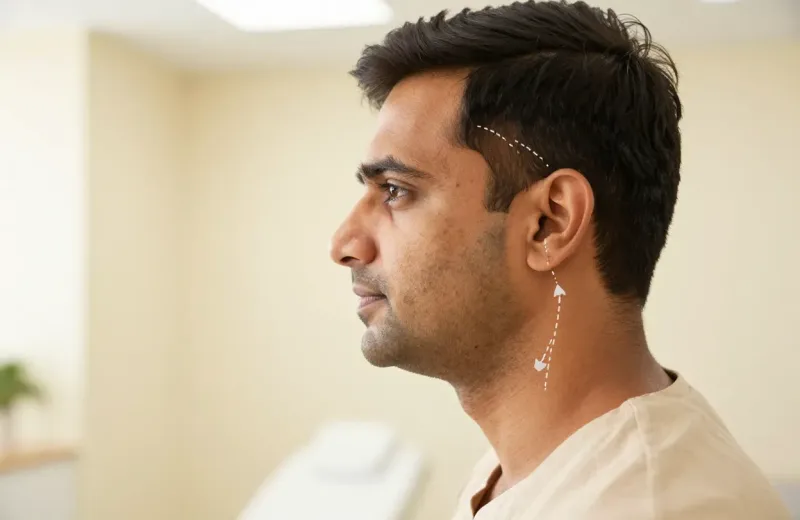
Sideburns and scars
Reconstruction of sideburns and grafting into facial scars after assessment.
View details →Common questions
Beard Transplant in Surat, answered.
Short, honest answers. Your own case is discussed at consultation. All questions.
How much does a beard transplant cost in Surat?
The cost depends on the number of grafts, the areas treated, one or two sessions, anaesthesia and facility charges, medicines and follow-up. There is no fixed package; a written estimate with a range is given after examination, and no prices are quoted online.
Can a beard transplant fix a patchy beard?
In most cases yes, if the donor area is adequate and the patch is not caused by active alopecia areata or infection. The grafts fill the patch with hair that grows like the rest of the beard. Suitability is decided at consultation.
Will the transplanted beard look natural?
That depends on direction, angle and the use of single hairs at the edges and the moustache. The design is drawn with you in a mirror, and each site is made to follow the way beard hair grows on that part of the face.
Can I shave after a beard transplant?
Trimming is usually fine from three to four weeks and shaving from about four weeks, once the grafts are secure. Before that the area is washed only as shown at the clinic. Healing varies, so check with the team before your first shave if you are unsure.
Where do the grafts for a beard transplant come from?
Usually from the back of the scalp, where hair is dense and tends to persist. In some men, denser beard hair under the chin can also be used. The donor area is spread evenly so it does not look thinned.
How long until a transplanted beard looks full?
Transplanted hairs shed in the first weeks and regrow from about three months. The beard fills out between months six and eight and is judged at nine to twelve months. Timelines vary from person to person, so early shedding is expected and is not a sign of failure.
Consultation with Dr. Ashutosh Shah at the Vesu clinic, by appointment. No forms, no waiting on hold.