
Hair transplant in Surat
Corrective Hair Transplant in Surat
A corrective hair transplant in Surat repairs the result of an earlier hair transplant: a hairline that sits too low or too straight, grafts growing in the wrong direction, pluggy or patchy growth, a visible donor scar or a thinned donor area. It starts with an honest assessment of what can be improved with the donor hair you have left.
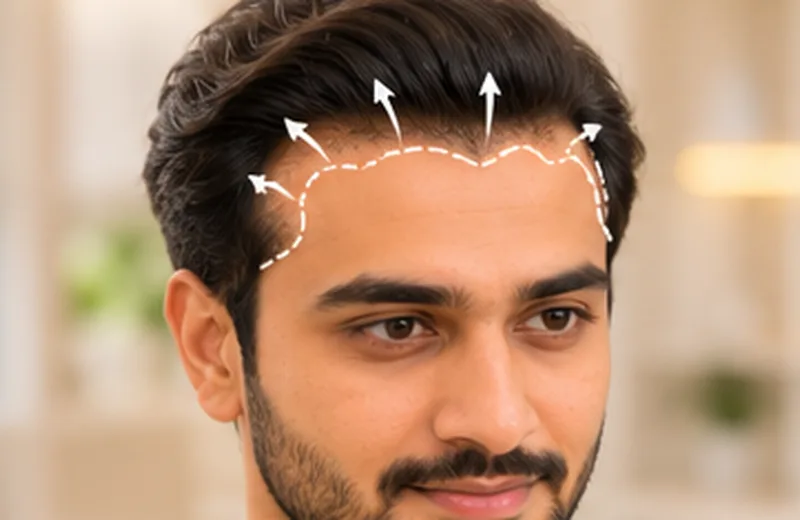
Corrective hair transplant is some of the most careful work a hair surgeon does, because donor hair may already be limited. Improvement is usually possible; perfection is not promised. The plan may combine removing and reusing misplaced grafts, adding single hairs, grafting into scars, beard hair as extra donor, and scalp micropigmentation for camouflage.
What is a corrective hair transplant?
A corrective hair transplant is a second procedure that improves the appearance of an earlier one. It uses the same FUE and FUT techniques, together with graft removal, scar grafting and camouflage, to change a hairline, redirect growth, add density or hide a donor scar. Because every earlier procedure uses some of the lifetime donor supply, planning begins with what is left rather than with what is wanted.
At Elegance Clinic in Surat, corrective work is planned and performed by Dr. Ashutosh Shah, M.B.B.S., M.S. (General Surgery), M.Ch. (Plastic Surgery), D.N.B. (Plastic Surgery), a plastic, reconstructive and cosmetic surgeon practising in Surat since 2004, with consultations at the Vesu and Adajan centres. Earlier treatment is assessed, not criticised; the aim is a plan for you, not an opinion about another clinic.
What problems can a corrective hair transplant improve?
- A hairline that is too low, too straight or too rounded, or one placed without the natural irregularity of a real hairline.
- Grafts growing in the wrong direction or at the wrong angle.
- Pluggy, grouped grafts from older techniques.
- Low density or patchy growth in the transplanted area.
- A wide or visible FUT donor scar.
- An over-harvested donor area with a thinned or moth-eaten look.
- Scalp scars from earlier surgery or injury where hair does not grow.
Who is a candidate for corrective hair transplant?
Corrective work suits people whose earlier transplant has fully matured, usually twelve months after surgery, and who still have donor hair on the scalp or beard that can be used safely. The scalp should be free of active infection or scalp disease, and expectations need to match what the remaining donor supply can give.
Who may not be suitable
When the donor area is depleted, more grafting can make the back of the head look worse. In those cases the honest plan relies on scalp micropigmentation, a hair system or medical treatment rather than surgery. Suitability is decided at a consultation with examination of the transplanted and donor areas, never from photographs alone.
Which corrective options are used in Surat?
| Problem | Approach |
|---|---|
| Unnatural or low hairline | Selected grafts removed with small FUE punches and reused behind the hairline; single hairs added to soften the edge |
| Wrong direction or pluggy grafts | Removal and redistribution of the worst grafts; new single and double-hair grafts placed between them in the correct angle |
| Low density | Further grafting from scalp or beard donor, often staged |
| Visible FUT scar | Grafting into the scar after assessing blood supply, or scalp micropigmentation, or both |
| Thinned donor area | Scalp micropigmentation for camouflage; no further harvesting from that zone |
Some cases are staged over two or three sessions, months apart, so each stage can be judged before the next. Read more on hair transplant in Surat.
How is a corrective hair transplant performed?
- Consultation and records: history of the earlier procedure, any graft counts, photographs and reports you have, and examination of the transplanted area, the donor area and any scars.
- Plan in writing: which grafts come out, where new grafts go, which donor sources are used, how many stages, and what the realistic end point looks like.
- Preparation: stop smoking and alcohol as advised; pause blood-thinning medicines only on your doctor's instruction.
- Local anaesthesia: the main discomfort of the day.
- Graft removal: selected grafts are taken out with fine punches and, where viable, dissected and reused.
- Harvesting and placement: new grafts from the scalp or beard are placed in the planned direction and angle, with single hairs at the hairline.
- Immediate care: written instructions, medicines and follow-up dates.
Session length depends on the work planned, from two or three hours for a hairline refinement to a full day for a staged repair.
What are the benefits of a corrective hair transplant?
- A hairline can be softened, raised or reshaped so it suits your face and age.
- Misdirected or pluggy grafts can be removed and reused rather than wasted.
- Scars can be made less visible with grafts, pigment or both.
- Density can be improved where donor hair allows.
These are general possibilities. The result depends on how much donor hair remains, the condition of the scalp and the scars, and realistic expectations, all of which are discussed at consultation rather than promised.
Is corrective hair transplant safe? Side effects and risks
Corrective surgery carries the same risks as a first transplant, with a few extras because the scalp has been operated on before. Scarred tissue has a poorer blood supply, so grafts placed into scars can grow less well, and healing is slower. Removing grafts leaves tiny marks that fade but are not invisible. Taking more from a thinned donor area can make it look worse, which is why donor limits are respected.
Expected effects are swelling, crusts, temporary numbness, itching and shedding of transplanted hairs before regrowth. Less common problems are folliculitis, bleeding, infection, small cysts, uneven growth and the need for a further stage. All of these are explained and written in your consent form. Call the clinic the same day for fever, spreading redness, pus or increasing pain. The International Society of Hair Restoration Surgery publishes independent patient information on hair restoration surgery.
How long does corrective hair transplant recovery take?
Recovery is similar to a first transplant, with extra care in scarred areas, which heal more slowly. Desk work is usually possible within five to seven days and physical work within ten to fourteen days. Crusts fall by about day ten, transplanted hairs shed over weeks two to six, and regrowth starts from about three months, judged at nine to twelve months. Where grafts were removed, the small marks settle over weeks. Your written plan gives dates for your own case, and the what to expect after a hair transplant guide describes each stage.
What does corrective hair transplant cost in Surat?
The cost of a corrective hair transplant in Surat depends on your individual assessment, so there is no fixed package. The main factors are the complexity of the repair, graft removal work, the number of new grafts and their donor source, the number of stages, scalp micropigmentation if used, anaesthesia and facility charges, medicines and follow-up visits. After examination you receive a written estimate with a range. The guide to hair transplant cost in Surat explains each factor. No prices are quoted on this website, and there are no offers or EMI promotions.
What results can I expect from corrective surgery?
Improvement is the realistic goal. A hairline can look softer and more natural, direction can be corrected in the areas treated, scars can become far less noticeable, and density can improve within the limits of the donor supply. Transplanted hairs shed first and regrow from about three months, with the result judged at nine to twelve months, longer for grafts placed in scars.
Results differ between people and depend most on how much donor hair is left. No percentage or guarantee is given, and if the honest answer is that surgery would not help, that is what you will be told.
Why choose Elegance Clinic for corrective hair transplant in Surat?
- Plastic surgeon-led care: repair work, scar grafting and donor management are reconstructive problems, and they are planned and performed by Dr. Ashutosh Shah, M.B.B.S., M.S. (General Surgery), M.Ch. (Plastic Surgery), D.N.B. (Plastic Surgery), practising in Surat since 2004.
- Assessment without blame: the earlier procedure is examined, not judged; the plan is about your scalp from here.
- Donor discipline: no further harvesting from a depleted zone; beard hair and camouflage are used where they are the safer answer.
- Staged plans in writing: each stage and its purpose are written down before you decide.
- Two centres in Surat: consultations at Vesu and at Adajan, in English, Hindi and Gujarati.
The clinic does not publish patient photographs, reviews or case counts, in line with Indian medical advertising rules, so results are discussed with you at consultation.
Book a corrective hair transplant consultation in Surat
If an earlier hair transplant has not given the result you hoped for, start with a consultation at the Vesu or Adajan centre. Bring any photographs, graft counts and reports from the earlier procedure; they help, though they are not essential. The visit takes 30 to 45 minutes and ends with a written plan, which may or may not recommend surgery. Message the clinic on WhatsApp or see the location and booking page.
Explore
Options under Corrective Hair Transplant in Surat
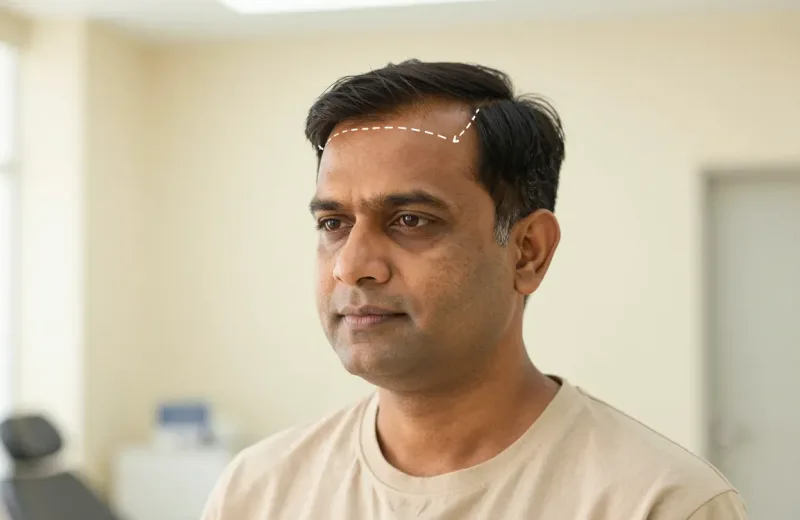
Hairline redesign
Softening or raising an unnatural hairline with single-hair grafts and selective removal.
View details →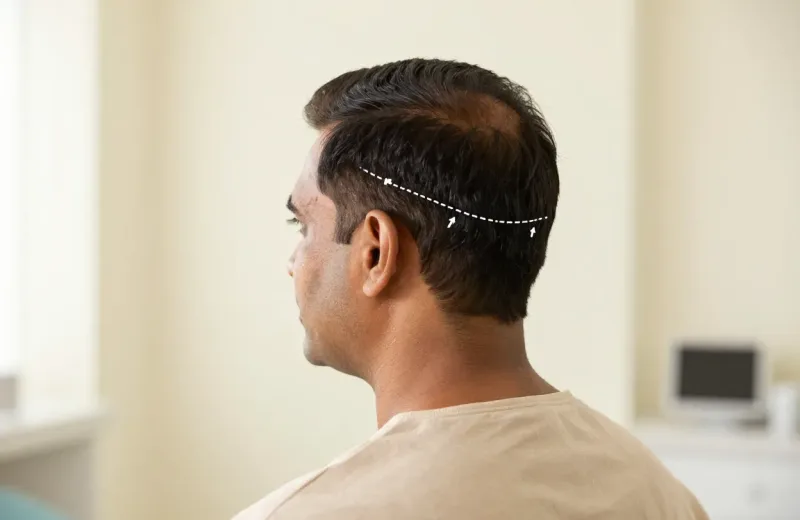
Scar and donor repair
Grafting into FUT scars and camouflaging over-harvested donor zones.
View details →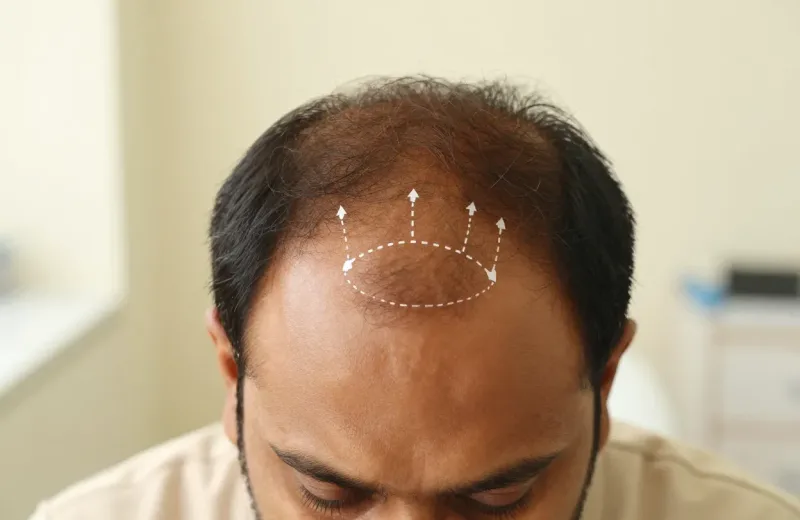
Density and direction
Adding density between old grafts and correcting direction in patches.
View details →Common questions
Corrective Hair Transplant in Surat, answered.
Short, honest answers. Your own case is discussed at consultation. All questions.
How much does a corrective hair transplant cost in Surat?
The cost depends on the complexity of the repair, graft removal work, the number and source of new grafts, the number of stages, pigment camouflage if used, anaesthesia and facility charges, medicines and follow-up. There is no fixed package; a written estimate with a range is given after examination.
Can a failed hair transplant be corrected?
Often it can be improved, though rarely made perfect. How much depends on the donor hair left on the scalp and beard, the condition of the scalp and any scars. An honest assessment comes first, and sometimes the advice is camouflage rather than more surgery.
Can misplaced grafts be removed?
Yes. Selected grafts can be removed with small FUE punches and, where they survive the removal, dissected and placed again in a better position. The tiny marks left behind fade over weeks, and how many grafts can be moved is decided after the surgeon examines the area.
Can beard hair be used on the scalp?
Yes, as a supplementary donor when the scalp donor area is limited. Beard hair is thicker and slightly different in texture, so it is placed where that matters least, usually behind the hairline for density. Whether your beard is a suitable donor is assessed at consultation.
How long after the first transplant can correction be done?
Usually after twelve months, once the earlier result has fully grown and the scalp has settled. An earlier review is useful for planning, but surgery before the result has matured can waste grafts. You can book a review at either centre while you wait.
Do I need the records from my earlier transplant?
They help: photographs, graft counts and reports show what was done and where. They are not essential; the examination of your scalp and donor area is what the plan is built on. Bring whatever you have to the consultation, even if it is incomplete.
Consultation with Dr. Ashutosh Shah at the Vesu clinic, by appointment. No forms, no waiting on hold.