
Corrective Hair Transplant in Surat
Hair Transplant Density Correction in Surat
Hair transplant density correction in Surat is a second procedure for people whose earlier transplant looks thin, patchy or grows in the wrong direction. Grafts are added between the existing ones, and badly angled grafts may be removed and placed again. What can be done depends on how much donor hair is left.
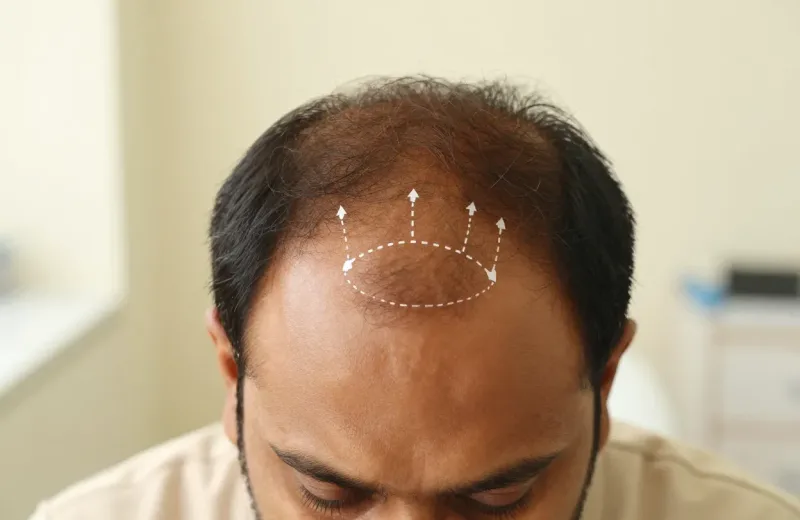
What is density and direction correction?
After a transplant, the scalp may show through because too few grafts were placed, because some did not grow, or because native hair behind them has thinned since. Sometimes the hairs grow upright or sideways and are hard to style.
Correction adds grafts into the gaps and, where needed, removes misdirected grafts one by one and replaces them at the right angle.
Who is it suitable for?
It suits people who are at least twelve months past their last transplant, so that the final growth is known, and who still have usable donor hair on the scalp or beard. The cause of the thin result is worked out first.
If ongoing hair loss is the reason, medical treatment is started before any more surgery.
How is it performed?
- The earlier surgery is reviewed: graft numbers, donor scars, growth and direction.
- The remaining donor supply is measured, including the beard.
- Grafts are taken by FUE, and misdirected grafts are lifted out where needed.
- New sites are made between existing hairs without damaging them.
- Grafts are placed in a consistent direction.
Large corrections may be staged.
What is recovery like?
Recovery follows the pattern of a first transplant: crusts for seven to ten days, shedding in the first six weeks and regrowth from three to four months. Existing transplanted hair around the new grafts can shed temporarily and usually returns.
What are the risks and limits?
The donor area is the main limit. If many grafts were used before, full density may not be possible and priorities are set, usually the hairline and front. Scar tissue from earlier work lowers blood supply, so growth can be less predictable.
Other risks are those of any transplant: swelling, numbness, pimples and infection.
What affects the cost in Surat?
The number of grafts added, any grafts to be removed and replaced, use of beard hair and the need for stages decide the estimate. Repair work takes longer per graft than a first transplant.
A written range follows examination. See hairline transplant and design for work on the front edge.
Independent patient information: NHS: hair transplant and International Society of Hair Restoration Surgery: treatments for hair loss.
Explore
Related treatments
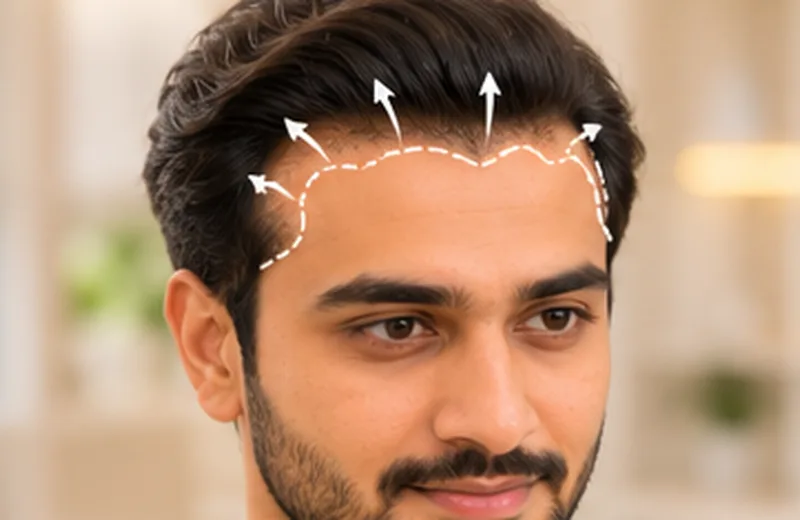
Corrective Hair Transplant
The main page: who it suits, how it is done, recovery, risks and cost factors.
View details →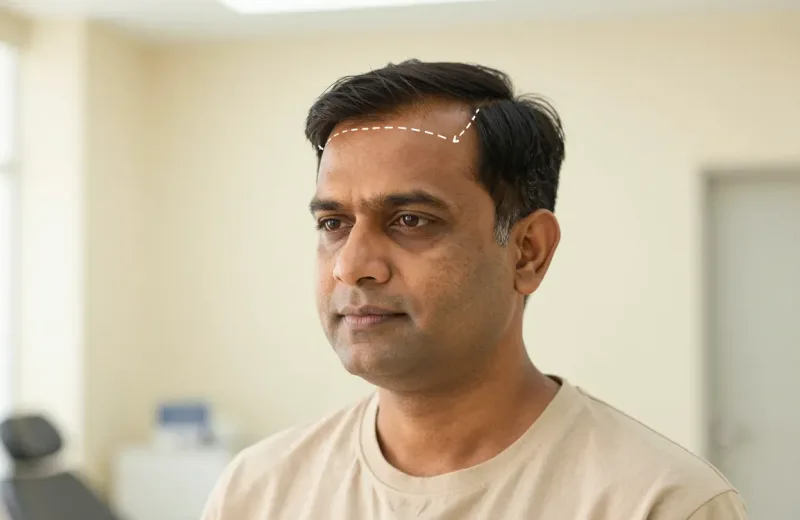
Hairline Transplant and Design
Hairline transplant in Surat rebuilds the front edge of the hair, the part other people see first.
View details →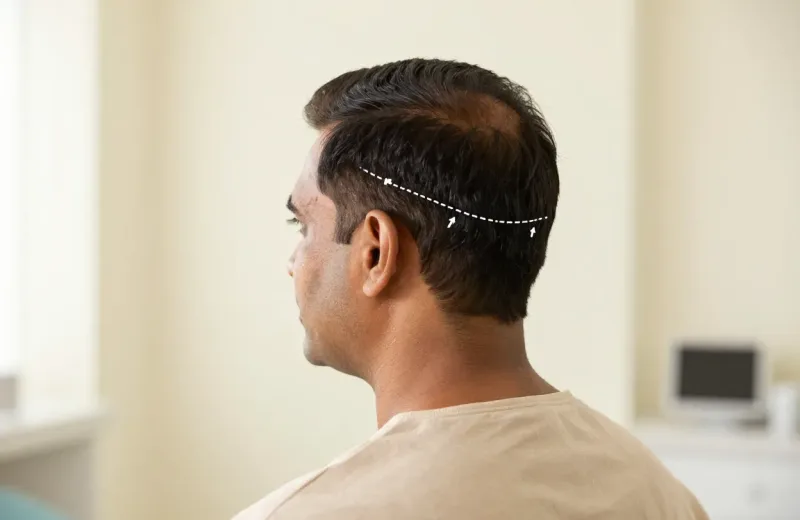
Scar Hair Transplant
Scar hair transplant in Surat places hair grafts into scars where hair no longer grows.
View details →Common questions
Hair Transplant Density Correction in Surat, answered.
Short, honest answers. Your own case is discussed at consultation. All questions.
How long should I wait before a second transplant?
At least twelve months, so that the first result has fully grown and the scalp has recovered. Adding grafts sooner can damage hairs that are still on their way. The surgeon examines the area and the donor supply before a second session is planned, so the wait may be longer for some patients.
Why does my transplant look thin?
Common reasons are too few grafts for the area, grafts that did not grow, and continued loss of native hair. An examination and your earlier records help to find which applies. Bring any graft counts, photographs and treatment details you have, because the correction plan depends on the cause.
Can hair growing in the wrong direction be fixed?
Often yes. The misdirected grafts can be removed individually and placed again at the correct angle, or covered by new grafts in the right direction. Which method suits you depends on how many hairs are affected, where they sit and how much donor hair remains, so an examination comes first.
What if my donor area is already used up?
The scalp donor area is measured again, and beard hair may be considered. If supply is very limited, non-surgical options such as pigment or a hair system are discussed. The surgeon explains plainly what the remaining donor hair can and cannot achieve before any plan is agreed with you.
Will adding grafts damage my existing transplanted hair?
The new sites are made carefully between existing hairs under magnification, at the same angle, so that the roots already there are not cut. Some nearby hairs may shed temporarily from the stress of surgery. They usually grow back within a few months, along with the new grafts.
Consultation with Dr. Ashutosh Shah at the Vesu clinic, by appointment. No forms, no waiting on hold.